00 / The unseen
Most of what happens around a site is never seen.
Darkness, fog, walls, distance and terrain hide activity from cameras and patrols. But almost everything that moves, strikes, idles or fails makes sound.
Intelligence beyond sight
Train, share and deploy AI models for sound, or use them in integrated sensing solutions. Sonic Sense AI turns acoustic signals into useful insight across infrastructure, industry, security and beyond.
00 / The unseen
Darkness, fog, walls, distance and terrain hide activity from cameras and patrols. But almost everything that moves, strikes, idles or fails makes sound.
01 / Civil security
Around public buildings and perimeters, footsteps, passing vehicles and sudden impacts carry acoustic clues. Sound analysis can turn those clues into events a security team can assess.
02 / Critical infrastructure
From water treatment plants and telecom facilities to remote energy sites, acoustic monitoring can help identify movement, impacts, drilling and changes in equipment sound. Relevant events become signals for investigation.
03 / Defence and field operations
For field teams and remote perimeter operators, terrain and darkness can limit visibility. Footsteps, engines, rotor tones and equipment sounds may add useful context around mobile positions and remote sites, depending on conditions and deployment.
04 / Sound, and more
Detect and interpret activity through sound alone, or combine acoustic intelligence with radar, lidar and other sensors. Each contributes a different kind of evidence, helping teams understand what may be happening around a site.
03 / Why current systems struggle
Camera / 01
In clear conditions a fixed camera covers a useful slice of the perimeter. Its view is a cone: directional and bounded.
Camera / 02
Fog, darkness, glare, lens condensation and contamination on the housing all reduce what the image can show.
Camera / 03
Walls, containers and vehicles cast blind shadows. Anything outside the narrow viewing angle is simply not there. Public areas may need to be masked for privacy and GDPR reasons.
Radar + lidar / 04
Active sweeps extend the picture with range and geometry — a real improvement.
Radar + lidar / 05
Assets, terrain and fencing leave unscanned pockets. Results depend on placement, geometry and careful calibration.
System / 06
Every extra sensor brings setup, alignment, privacy review and deployment cost — and the gaps rarely disappear entirely.
04 / Why sound adds value
Same site. Nothing reset. Now listen.
Acoustic / 07
The area the camera could not see still produces sound. Low, repeating surface ripples reach a passive listening node — no light, no emitted signal required.
Acoustic / 08
Tighter, directional pulses from beyond the ridge — where radar had no line of sight — can be flagged as a potential alert for a team to assess.
Acoustic / 09
A sharp transient on the perimeter, even inside a privacy-masked area. Illustrative alerts such as intrusion, vandalism or sabotage-related activity are signals for investigation, not a verdict on intent.
Acoustic / 10
Passive sensing, suitable for urban and remote sites, and deployable in a GDPR-compatible way when configured and used lawfully. Performance depends on acoustics, noise and placement, so site-specific validation is essential.
Illustrative scenes. Not live data or detection results. *Compliance depends on configuration, lawful use and site conditions.
05 / Care & monitoring
In hospitals, care homes and the homes of people living alone, the first sign that someone needs help is often a sound. Sonic Sense provides non-intrusive acoustic awareness, designed to recognise calls for help, falls, signs of illness such as coughing, equipment faults and alarms, so busy carers can respond with dignity and people can keep living independently.
Support, not substitute. Designed to help carers notice what matters sooner. It supports human care; it does not replace it.
Hospital ward
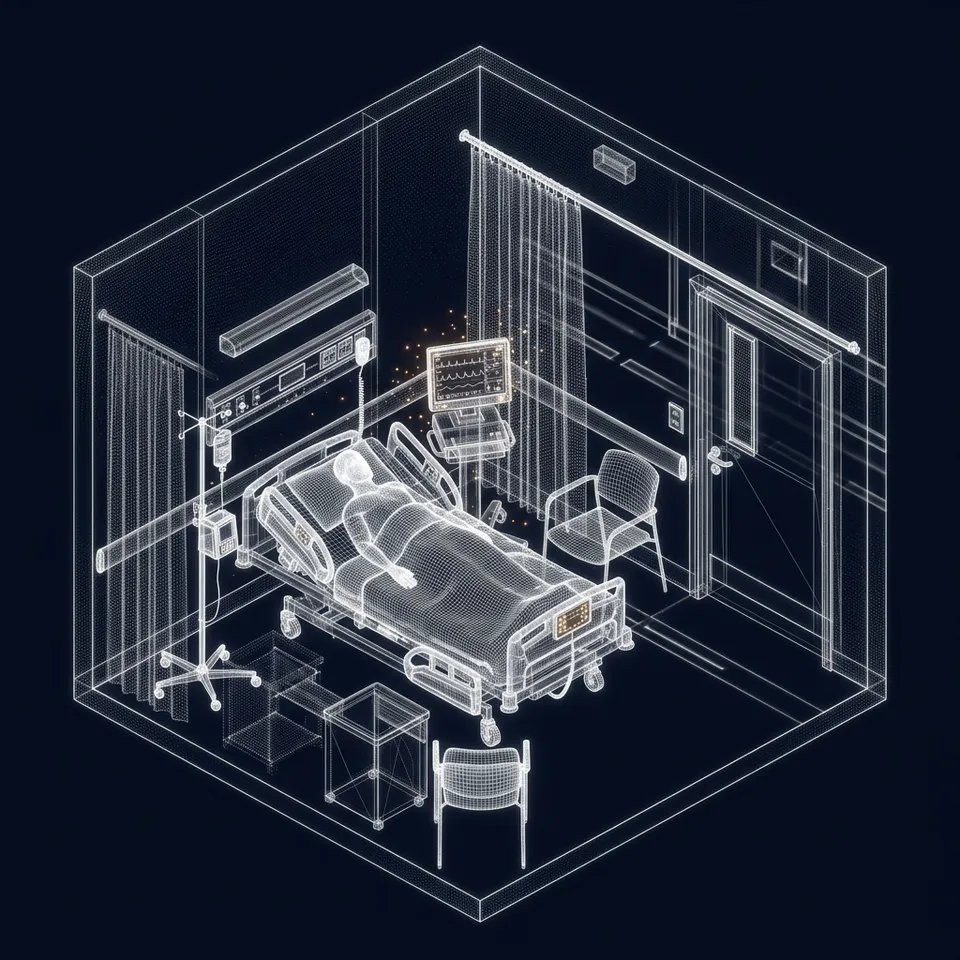
Ward teams cannot be at every bedside at once. Sonic Sense is designed to listen for the sounds that matter between rounds, such as a patient calling out, an unanswered equipment alarm or a pump fault, and bring them to a nurse’s attention sooner.
Care home
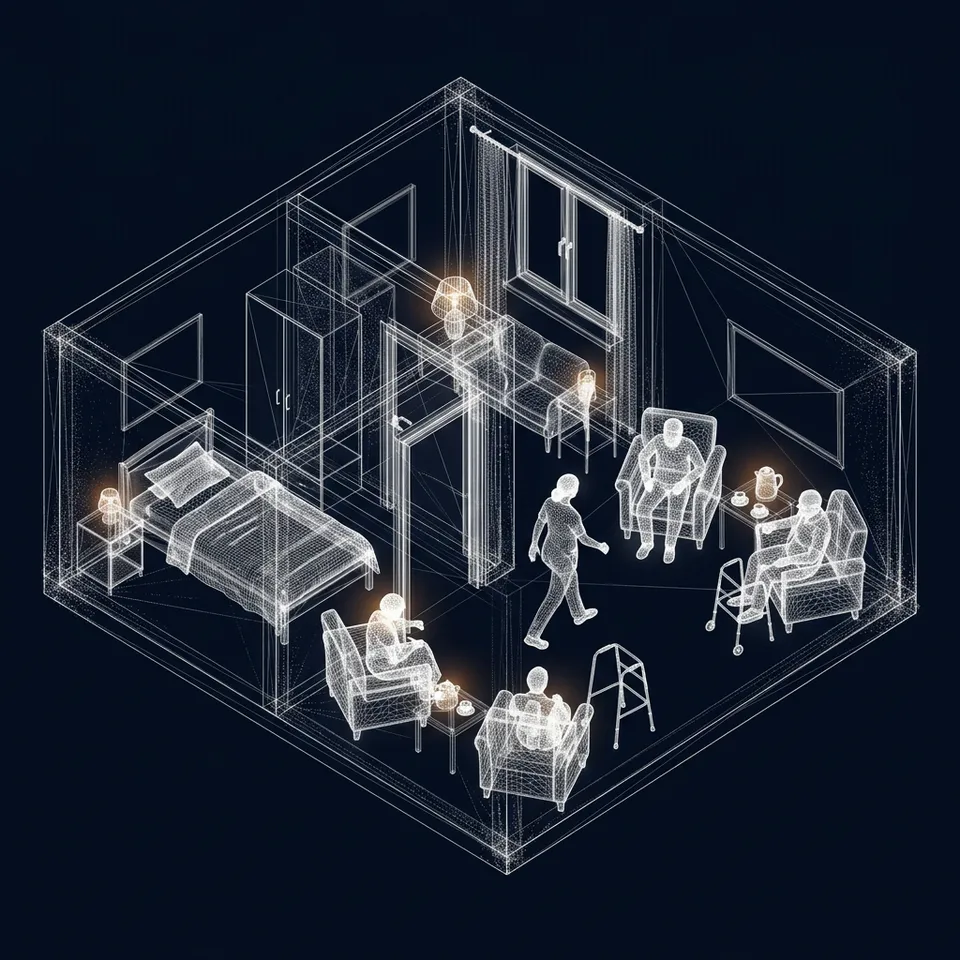
At night a small team may be responsible for a whole corridor of rooms. Acoustic awareness can help carers know where to go first when a resident shouts, falls or becomes unwell, without cameras in private rooms.
Living alone
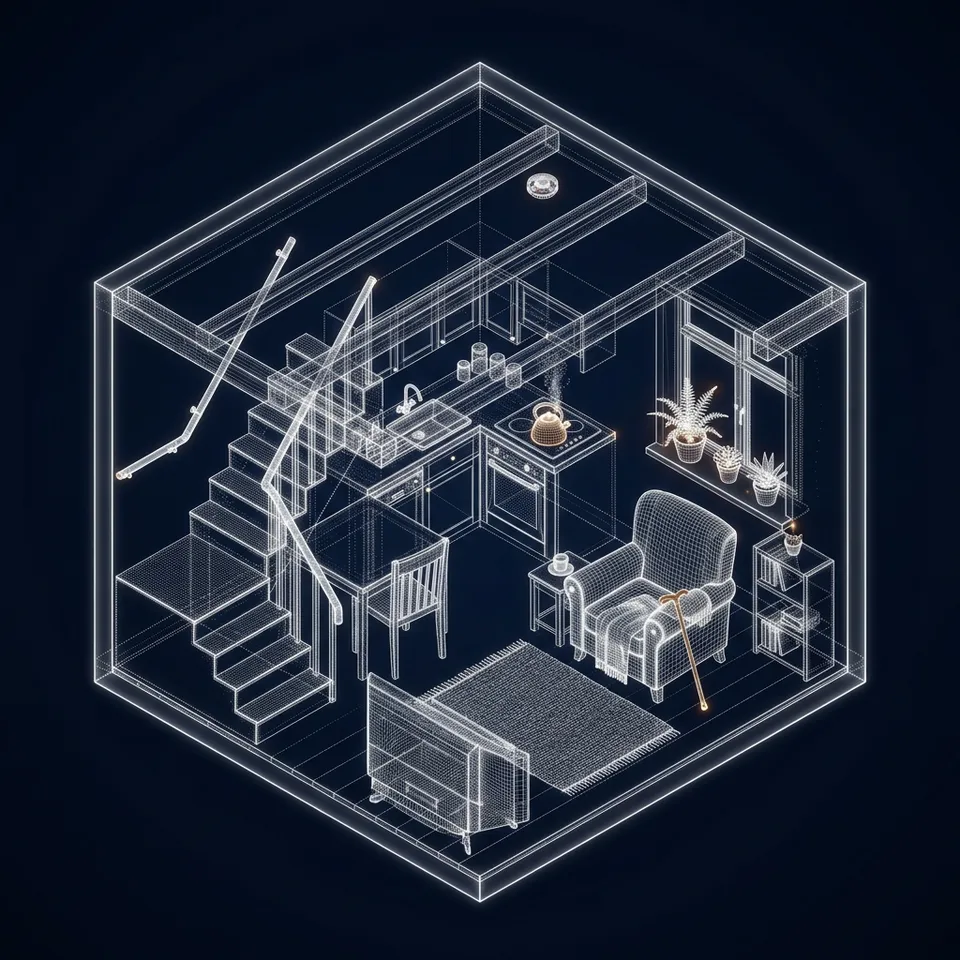
For people living independently, a fall or a smoke alarm can go unheard for hours. Sonic Sense aims to recognise these moments and let a chosen family member or care service know, so help can be arranged on the person’s own terms.
Privacy first. Listening is set up with the consent of the people being cared for and configured with each care setting, including which sounds matter and who is alerted.
06 / Sound AI platform
Train, deploy and use machine learning on sound data, across industries. Build a model yourself, use or adapt a pretrained one, or choose one another organisation has made. Every route ends in the same place: a deployed model producing insight.
Route A: Sound data → Train → Evaluate → Deploy → Inference
Four ways to source a model
The same models run inside our integrated solutions 07 →07 / Integrated solutions
For teams exploring a complete system: hardware, software, AI models and alerting designed to work together. Each hardware path is designed to feed the same processing pipeline and models as the platform above.
Off-the-shelf sensors → shared processing → alerting → Machine and ventilation monitoring (prototype deployed in a live environment)
Planned hardware options
Apply to a use case
Illustrative architecture. Hardware options are planned; prototypes are at different stages. Capabilities require site-specific validation. No performance figures implied.
Application landscape / 50 possibilities
From equipment condition to site activity—sound patterns worth understanding.
Illustrative possibilities, not a guarantee of availability or performance. Suitability depends on sensor capability, placement, background noise and task-specific training and validation. An acoustic event alone does not establish intent.
Contact / let's talk
Looking to buy a solution, run a pilot, partner with us or discuss investing? Choose a route below to email our team, or call us directly.